


|
Two of the Top Rosés of the Year from one of the Most Beautiful Wineries In The World Pre-Arrival - ETA First Week of August Clos Ste. Magdeleine Cassis Rosé 2019
$34.99 on sale
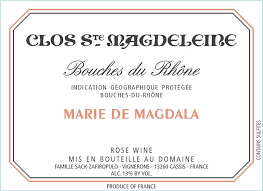
Clos Ste. Magdeleine Rosé Bouches-du-Rhône “Marie de Magdala”
$39.99 on sale
We just received our allocation of one of our perennial favorite rosé wines every year, Clos Ste. Magdeleine. But along with our precious lot of their classic Cassis Rosé, this year for the first time ever we were offered just ten cases of their most sought after cuveé, the 100% old vines Bouches-du-Rhone Rosé “Marie de Magdala”. Without doubt this property is one of the most stunningly beautiful I have ever visited. Perched above the shimmering Mediteranean and framed to the east by the 1,200 foot Cap Canaille, the highest sea cliffs in France, and crystal clear bays on either side. The multicolored home, organic gardens and vineyards that slope down terraces and plateaus that reach right to the sea are simply spectacular. Add the two starred Michelin restaurant La Villa Madie just a stone’s throw away at the bottom of the cliff, and this starts to seem like paradise.
Our meetings there always take place on a terrace overlooking the sea a breathtaking vista after a quick tour of the winery, gardens and vineyards. When tasting through their line up of white and rosé wines in Province’s typically perfect weather, all seems right with the world. The only problem is getting enough of their magnificent wines! Last year, as always, it was at the top of the charts with notes that are typical of the restrained, elegant complex beauty of this wine: "Shimmering salmon skin. Displays vibrant, mineral-accented red berry and blood orange scents, along with a sexy floral overtone that gains strength with air. Juicy and sharply focused on the palate, offering intense red currant, strawberry, orange peel and lavender flavors that deftly combine power and delicacy. Finishes with sharp delineation and superb, mineral-driven persistence, leaving a sexy floral note behind." The Clos Ste. Magdeleine Cassis is a blend of 40% Grenache, 40% Cinsault, 20% Mourvèdre from a 2.2 hectare parcel of 15 - 40 year old vines grown in clay and limestone soils. The I.G.P. Bouches-du-Rhône Rosé “Marie de Magdala” is 100% Grenache from a minuscule .7 hectare parcel of 15-35 year old vines, also in clay and limestone and is exceptionally rare.
Read below for some background information from Importer Kermit Lynch, and the facts about these delicious wines. ETA is the first week of August, and our advice is mix up an order as many bottles of each of these as you can as they are not only terrific on release, but also for years after. Offered first come, first served while supplies last. All orders subject to confirmation. Cheers! Chris Cree MW, PluckyWines.com Courtesy of Kermit Lynch Wines: "The ancient fishing village of Cassis has seen its fair share of visitors over the millennia. Greek colonists from Phocaea first arrived in the sixth century B.C., and with them came the timeless Ugni Blanc grape and viticultural savvy. The Romans later made their way here, as well as their Barbarian successors, followed by the medieval Counts of Les Baux, all the way to tourists of the modern era looking to escape the cold, dark cities. Cassis is not only an active port, but what Kermit calls “an earthly paradise.” The vineyards of Clos Sainte Magdeleine are particularly stunning. They jut out on a private cape to meet majestic limestone cliffs, poised spectacularly above the sparkling, azure Mediterranean. With landscapes such as these, it is only fitting that writers and poets alike have found inspiration in Cassis. Only a handful of vignerons today are fortunate enough to produce A.O.C. Cassis, and the small quantities available are largely consumed locally with fresh fish—the best way to enjoy them. The Sack-Zafiropulos family has been making wine here for four generations and has continued to craft wines of grace and finesse, just as they were when founder Jules Savon won the Gold Medal for the domaine at the World’s Fair in 1900. That they share their limited quantities with us makes this long-term relationship all the more special. Viticulture and vinification at Clos Sainte Magdeleine is under the direction of Jonathan Sack. The domaine bottles both whites and rosés, the latter of which are especially limited. Sack just started the three-year long conversion to organic viticulture, a philosophic progression after years of sustainable farming. Clos Sainte Magdeleine’s success lies in an uncanny ability to capture a dichotomous nerve and sun-kissed unctuousness in their wines, making them both incredibly food-friendly and delicious entirely on their own."
_____________________ Dominio Del Águila Albillo Viñas Viejas Wine Advocate 97 points
$69.99 on sale
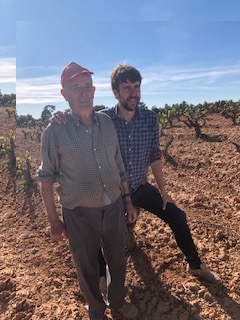
As a young student of enology, Jorge Monzón traveled to Burgundy and despite not speaking a word of French nor having any recommendations let alone experience, he convinced Domaine La Romanée-Conti to take him on as an intern. His eagerness and desire to learn led him to shadow maître de chai, Bernard Noblet, observing all the steps he took to create the famed wines of this historic Domaine. Returning to Ribera del Duero, and his hometown of La Aguilera, Jorge worked a couple of years at Vega Sicilia before becoming a technical director at Arzuaga-Navarro. While working for others, Jorge began purchasing old vineyards around La Aguilera – parcels in danger of being ripped up and replaced with more productive clones of Tempranillo as well as “fashionable” Cabernet Sauvignon, Merlot, Petit Verdot, and Malbec. These undesirable vineyards were ancient, unproductive massale selections of Tempranillo mixed with a diverse range of other varieties including a high proportion of white grapes – all “useless” in a region that prized extraction, production and the “ameliorating” contribution made by international varieties. Together with his wife, Isabel Rodero, Jorge founded Dominio del Águila in 2010. Farming is certified organic and Isabel, who is an architect, supervised the renovation of three ancient cellars dating to the 15th century dug deep into the bedrock under the village. Natural yeast, whole cluster co-fermentations are the first step in the process with pigeage done by foot. After primary fermentation, the wines are placed in oak barrels for aging in their cold, subterranean cellars to ensure that the evolution of their wines proceeds slowly.
Albillo is a catch-all name for a diverse collection of white grape varieties in Spain. Due to the fact that the name derives from the Spanish word for white, Albillo can differ from region to region, and can even be used for different varieties within a single D.O.! In Ribera del Duero, where white wines are not recognized under D.O. rules, there are several ancient varieties that are called Albillo. Jorge makes it simple, however – he only selects Albillo with small clusters and deep golden color when ripe to make his Blanco.
Wine Advocate 97 points
Dominio Del Águila Albillo Viñas Viejas $69.99 on sale
|
.png)





 |